In brief
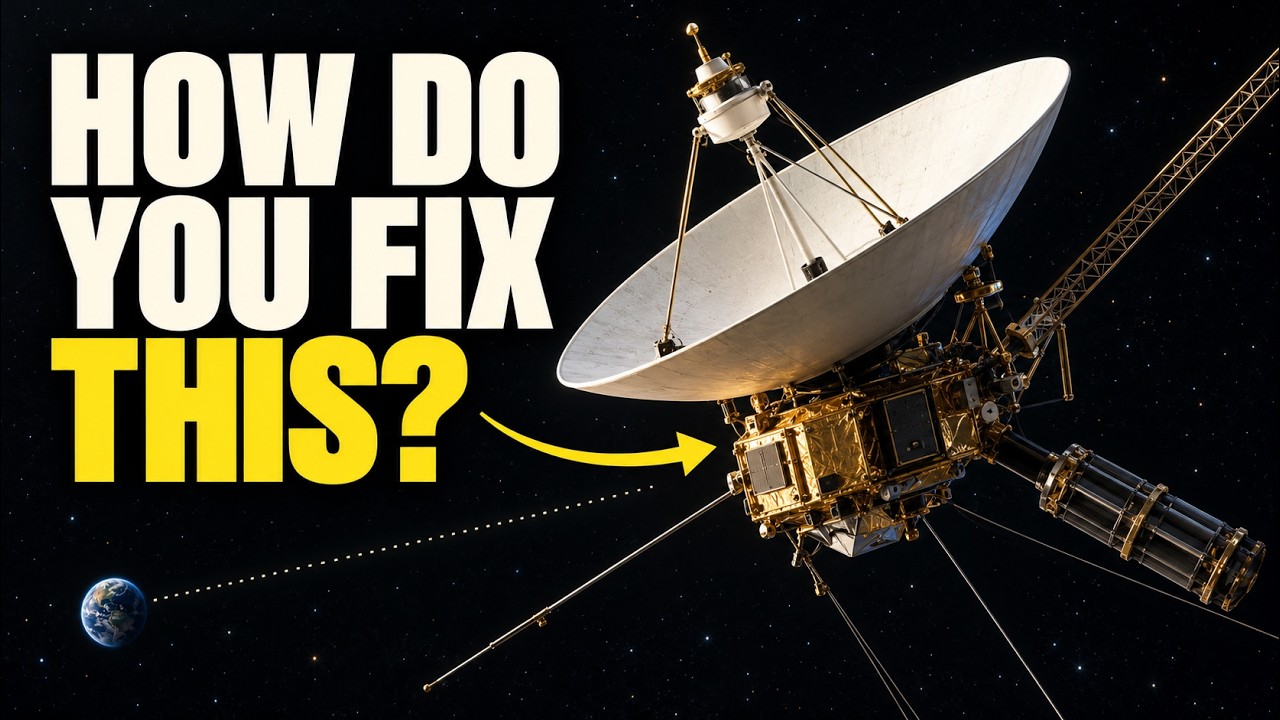
In November 2023, Voyager 1, the most distant spacecraft ever built, began sending home gibberish from 24 billion kilometres away. Nobody could touch it, test a fix on the ground, or get an answer in less than two days.
This is our most detailed film yet, and it assumes you know nothing about space or computers. It tells the story of the machine and the people behind it: the 1965 discovery that made the trip possible, how the Voyagers were built to last, what they found at Jupiter, Saturn, Uranus and Neptune, how Earth still talks to them, and how a small team working from fifty-year-old drawings found one failed memory chip and rewrote the software around it by hand, as Voyager 1 nears one light-day from Earth.
Sources
The film cites 173 sources. These are the key ones.
- NASA Voyager blog, “Engineers Pinpoint Cause of Voyager 1 Issue, Are Working on Solution” (2024-04-04)
- NASA JPL, “NASA’s Voyager 1 Resumes Sending Engineering Updates to Earth (JPL news release 2024-046)” (2024-04-22)
- JPL (Cummings slides), “How We Diagnosed and Fixed the 2023 Voyager 1 Anomaly from 15 Billion Miles Away (keynote slides, 18th Flight Software Workshop, Seattle)” (2025-03-25)
- NASA Voyager blog, “NASA Engineers Make Progress Toward Understanding Voyager 1 Issue” (2024-03-13)
- NASA JPL, “Voyager 1 Returning Science Data From All Four Instruments (JPL news release 2024-086)” (2024-06-13)
- NASA Science, “What Is a Light-Day? (Voyager 1: What Is a Light-Day)” (2026-08-19)
Credits
Photographs: NASA, NASA/JPL-Caltech, NASA/Carla Cioffi and NASA/Joel Kowsky (public domain). Voyager and Deep Space Network models: NASA 3D Resources. Sky: NASA/Goddard Space Flight Center Scientific Visualization Studio, Deep Star Maps 2020 (Gaia DR2: ESA/Gaia/DPAC), and the Yale Bright Star Catalogue. Distances: JPL Horizons. Map data: Natural Earth. Typefaces: Fraunces, Inter, JetBrains Mono, Silkscreen and Anton (SIL Open Font License). three.js (MIT License).